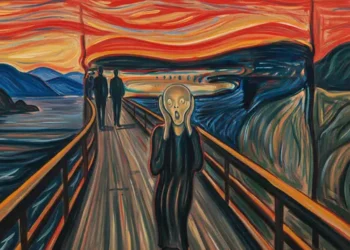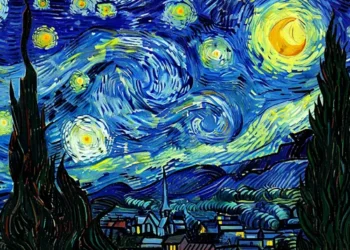


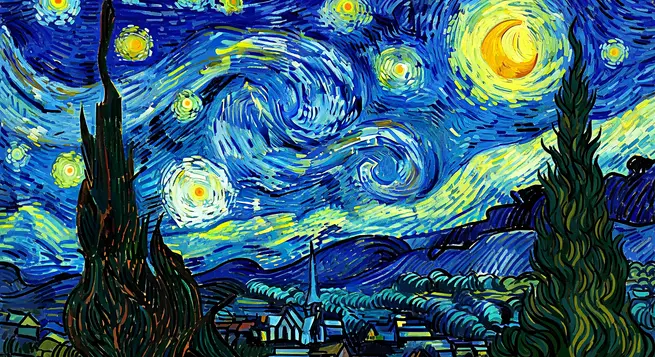

Vincent van Gogh’s Starry Night remains one of the most iconic paintings in the world, with its swirling blue skies and glowing stars. This quiz explores the history behind this canvas.
You will face questions about the artist’s life in France, the asylum where he painted, and the celestial details in the sky. Some questions ask you to remember small details about the composition.
Once you finish, you can try more trivia about famous artists, discover other art masterpieces, or read about famous museums and galleries.
Who painted ‘The Starry Night’ in 1889?
Claude Monet
Claude Monet
Paul Cézanne
Paul Cézanne
Vincent van Gogh
Vincent van Gogh
Henri Matisse
Henri Matisse
Where was the artist living when he painted ‘The Starry Night’?
Paris, France
Paris, France
Arles, France
Arles, France
Saint-Rémy-de-Provence, France
Saint-Rémy-de-Provence, France
Amsterdam, Netherlands
Amsterdam, Netherlands
In which museum is ‘The Starry Night’ currently housed?
The Museum of Modern Art (MoMA)
The Museum of Modern Art (MoMA)
The Louvre Museum
The Louvre Museum
The Metropolitan Museum of Art
The Metropolitan Museum of Art
The Van Gogh Museum
The Van Gogh Museum
What was the primary inspiration for the scene depicted in ‘The Starry Night’?
His childhood home in the Netherlands
His childhood home in the Netherlands
A sunflower field
A sunflower field
The view from his bedroom window at the asylum
The view from his bedroom window at the asylum
A dream he had while sleeping
A dream he had while sleeping
What medium was used to create ‘The Starry Night’?
Acrylic on wood panel
Acrylic on wood panel
Oil on canvas
Oil on canvas
Watercolor on paper
Watercolor on paper
Fresco on plaster
Fresco on plaster
What do many art historians believe the famous swirling patterns in the sky represent?
The movement of the wind through actual trees at night
The movement of the wind through actual trees at night
The artist’s interpretation of turbulence and light using bold brushstrokes
The artist’s interpretation of turbulence and light using bold brushstrokes
A massive storm passing over the town
A massive storm passing over the town
A solar eclipse happening over the village
A solar eclipse happening over the village
What was the name of the asylum where the artist stayed when he painted this work?
The Yellow House
The Yellow House
The Hôtel-Dieu de Paris
The Hôtel-Dieu de Paris
The Auvers-sur-Oise Hospital
The Auvers-sur-Oise Hospital
Saint-Paul-de-Mausole
Saint-Paul-de-Mausole
What large, dark, flame-like object is depicted in the foreground of the painting?
Cypress tree
Cypress tree
Pine tree
Pine tree
Olive tree
Olive tree
Oak tree
Oak tree
In what year was ‘The Starry Night’ created?
1887
1887
1889
1889
1893
1893
1891
1891
What is the origin of the village setting pictured at the bottom of the painting?
A fictional village reimagined from memory
A fictional village reimagined from memory
A depiction of Paris at night
A depiction of Paris at night
A realistic architectural study of the town of Saint-Rémy
A realistic architectural study of the town of Saint-Rémy
A bustling port city in northern France
A bustling port city in northern France
Why was the village in the painting ‘The Starry Night’ created from the artist’s memory rather than direct observation?
The village was completely demolished during his stay
The village was completely demolished during his stay
It was not visible from the window of his asylum room
It was not visible from the window of his asylum room
Heavy rain blocked his view of the landscape for months
Heavy rain blocked his view of the landscape for months
He was forbidden by doctors from ever looking at buildings
He was forbidden by doctors from ever looking at buildings
What is the primary color palette used in ‘The Starry Night’?
Bright sunlight and floral colors
Bright sunlight and floral colors
Fiery reds and oranges to show his emotional state
Fiery reds and oranges to show his emotional state
Deep blues, swirling yellows, and stark white contrast
Deep blues, swirling yellows, and stark white contrast
Muted grays and earthy tones to depict sadness
Muted grays and earthy tones to depict sadness
Which element of the village suggests the artist drew upon his Dutch roots for his composition?
The church steeple, which resembles those in the Netherlands
The church steeple, which resembles those in the Netherlands
The absence of people in the streets, typical of a modern city
The absence of people in the streets, typical of a modern city
The rolling hills, which resemble the Alps
The rolling hills, which resemble the Alps
The tropical palm trees, which were non-existent in the region
The tropical palm trees, which were non-existent in the region
In which city is the museum that holds ‘The Starry Night’ located?
New York City, USA
New York City, USA
London, UK
London, UK
Tokyo, Japan
Tokyo, Japan
Berlin, Germany
Berlin, Germany
How did the artist privately describe ‘The Starry Night’ in his correspondence?
He famously stated that it was the greatest work he had ever completed in his career
He famously stated that it was the greatest work he had ever completed in his career
He claimed it was his absolute masterpiece and crowning achievement
He claimed it was his absolute masterpiece and crowning achievement
He referred to it as a ‘failure’ due to its stylized, abstract elements
He referred to it as a ‘failure’ due to its stylized, abstract elements
He considered it his most religious work, representing the divine in nature
He considered it his most religious work, representing the divine in nature
Which of the following is true about the mountains depicted in the background of the painting?
They depict the Pyrenees, which he painted from a postcard.
They depict the Pyrenees, which he painted from a postcard.
They are entirely fictional mountains that do not correspond to any local geography.
They are entirely fictional mountains that do not correspond to any local geography.
They are the Dutch dunes, which he remembered from his childhood.
They are the Dutch dunes, which he remembered from his childhood.
They represent the real-life Alpilles mountain range visible from his asylum window.
They represent the real-life Alpilles mountain range visible from his asylum window.
In which year did the Museum of Modern Art (MoMA) acquire ‘The Starry Night’ through the Lillie P. Bliss Bequest?
1951
1951
1941
1941
1931
1931
1961
1961
Into which art movement is ‘The Starry Night’ officially categorized?
Cubism
Cubism
Surrealism
Surrealism
Impressionism
Impressionism
Post-Impressionism
Post-Impressionism
Researchers believe the brightest ‘star’ in the painting is actually which celestial body?
The planet Venus, which he described as the ‘morning star’
The planet Venus, which he described as the ‘morning star’
A lunar eclipse that occurred on the night he finished the painting
A lunar eclipse that occurred on the night he finished the painting
A Venusian planetary alignment visible that year
A Venusian planetary alignment visible that year
A Supernova that was visible to the naked eye in 1889
A Supernova that was visible to the naked eye in 1889
Which statement accurately reflects the creation process of the work?
It was created over several months using watercolor on paper
It was created over several months using watercolor on paper
It was sketched in complete darkness to capture the night without light
It was sketched in complete darkness to capture the night without light
It was painted during the day in several sessions, using a thick impasto technique
It was painted during the day in several sessions, using a thick impasto technique
It was painted entirely outdoors en plein air in a single night sitting
It was painted entirely outdoors en plein air in a single night sitting
What phase of the moon is depicted in the sky of Vincent van Gogh’s painting ‘The Starry Night’?
No moon, signifying his total loss of hope
No moon, signifying his total loss of hope
A solar eclipse, showing his obsession with the supernatural
A solar eclipse, showing his obsession with the supernatural
A crescent moon, representing an expressive symbol of night light
A crescent moon, representing an expressive symbol of night light
A full moon, symbolizing his path to recovery
A full moon, symbolizing his path to recovery
What is widely accepted as the artistic intent behind the exaggerated, swirling motion of the sky in ‘The Starry Night’?
He wanted to give the viewer a sense of cosmic chaos and spiritual fervor
He wanted to give the viewer a sense of cosmic chaos and spiritual fervor
He suffered from an eye condition that caused him to see light in this manner
He suffered from an eye condition that caused him to see light in this manner
He was trying to replicate the photography long-exposure techniques of his time
He was trying to replicate the photography long-exposure techniques of his time
He wanted to depict a static, featureless sky indicating a feeling of confinement
He wanted to depict a static, featureless sky indicating a feeling of confinement
You can do better
Not bad
Great!
If you enjoyed this quiz, try our trivia on art movements, learn about hidden symbols in art, or admire scenic mountains and landscapes.