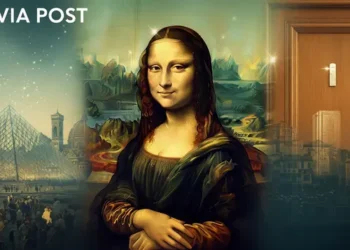


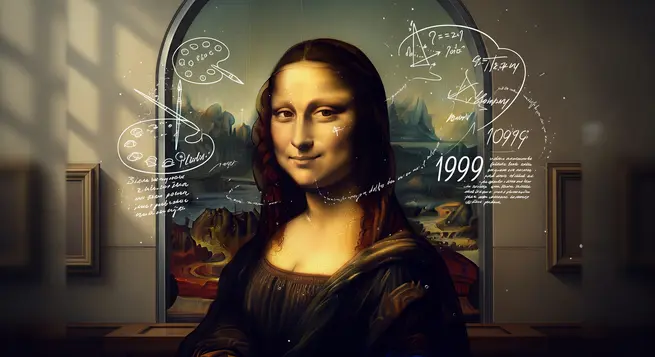
Leonardo da Vinci’s iconic model has several secrets. The painting has survived a notorious 1911 theft, centuries of handling, and physical wear.
This quiz covers the painting’s history, its time away from the Louvre, the identity of the sitter, and the specific techniques used by the artist.
Once you complete this, you can browse more trivia about art masterpieces, explore quizzes on famous artists, or read up on historical painting techniques to see how much you know.
Who is the artist credited with painting the Mona Lisa?
Leonardo da Vinci
Leonardo da Vinci
Donatello
Donatello
Raphael
Raphael
Michelangelo
Michelangelo
In which museum is the Mona Lisa currently permanently housed?
The Louvre
The Louvre
The Uffizi Gallery
The Uffizi Gallery
The Prado Museum
The Prado Museum
The National Gallery
The National Gallery
What medium and surface was the Mona Lisa painted on?
Oil on poplar wood panel
Oil on poplar wood panel
Fresco on stone
Fresco on stone
Oil on canvas
Oil on canvas
Tempera on plaster
Tempera on plaster
In what year was the Mona Lisa famously stolen from the Louvre?
1911
1911
1908
1908
1917
1917
1914
1914
What technique, involving subtle gradations of light and shadow, is used in the Mona Lisa to create soft transitions?
Chiaroscuro
Chiaroscuro
Sfumato
Sfumato
Impasto
Impasto
Frottage
Frottage
Who was the Italian museum worker convicted of stealing the Mona Lisa in 1911?
Pablo Picasso
Pablo Picasso
Guillaume Apollinaire
Guillaume Apollinaire
Vincenzo Peruggia
Vincenzo Peruggia
Eduardo de Valfierno
Eduardo de Valfierno
Who is widely believed to be the woman depicted in the portrait?
Isabella d’Este
Isabella d’Este
Lisa Gherardini
Lisa Gherardini
Caterina Sforza
Caterina Sforza
Cecilia Gallerani
Cecilia Gallerani
For approximately how long was the Mona Lisa missing after its 1911 theft?
Two years
Two years
Four years
Four years
One year
One year
Three years
Three years
During which century was the Mona Lisa painted?
16th century
16th century
15th century
15th century
17th century
17th century
14th century
14th century
Which physical feature of the sitter is notably missing, prompting years of art historical debate?
The sitter lacks eyebrows
The sitter lacks eyebrows
The eyes follow viewers from every angle
The eyes follow viewers from every angle
The landscape is entirely imaginary
The landscape is entirely imaginary
The background is a city street
The background is a city street
The term ‘sfumato’ is derived from an Italian word meaning what?
‘Smoking’ or ‘vanished’
‘Smoking’ or ‘vanished’
‘Sharp’ or ‘defined’
‘Sharp’ or ‘defined’
‘Bright’ or ‘glowing’
‘Bright’ or ‘glowing’
‘Heavy’ or ‘dense’
‘Heavy’ or ‘dense’
In which city was the Mona Lisa commissioned by Francesco del Giocondo?
Paris, France
Paris, France
Milan, Italy
Milan, Italy
Florence, Italy
Florence, Italy
Rome, Italy
Rome, Italy
The Italian title of the Mona Lisa, ‘La Gioconda’, is a play on the name of the sitter’s husband. What was his name?
Pope Leo X
Pope Leo X
Ludovico Sforza
Ludovico Sforza
Giuliano de’ Medici
Giuliano de’ Medici
Francesco del Giocondo
Francesco del Giocondo
What was the reported motive of the man who stole the Mona Lisa in 1911?
To destroy it as a protest against the museum establishment
To destroy it as a protest against the museum establishment
To return it to his homeland, Italy
To return it to his homeland, Italy
To hold it for ransom from the French government
To hold it for ransom from the French government
To sell it to a private collector in America
To sell it to a private collector in America
What current protective measure helps prevent physical damage to the Mona Lisa?
A dedicated armed guard inside the chamber
A dedicated armed guard inside the chamber
Laser beams
Laser beams
Movement sensors
Movement sensors
Armoured glass
Armoured glass
Which alternative theory about the subject’s identity was proposed by computer researcher Lillian Schwartz?
The Duchess of Milan
The Duchess of Milan
Self-portrait of the artist in drag
Self-portrait of the artist in drag
Salaì, the artist’s male apprentice
Salaì, the artist’s male apprentice
The artist’s mother, Caterina
The artist’s mother, Caterina
Compared to the traditional profile portraits of women in Florence at the time, what is distinctive about the subject’s gaze?
It is directed straight at the viewer rather than being averted
It is directed straight at the viewer rather than being averted
The subject is looking down at a book
The subject is looking down at a book
The gaze is directed upward toward the heavens
The gaze is directed upward toward the heavens
The eyes are fully closed
The eyes are fully closed
In which year was the painting stolen from the Louvre, a major turning point that elevated it to global fame?
1901
1901
1931
1931
1911
1911
1921
1921
What does the sfumato technique primarily involve in terms of practical application?
‘Smoke-like’ application of glazes
‘Smoke-like’ application of glazes
Using only primary colors to create contrast
Using only primary colors to create contrast
Using extremely coarse paint brushes for texture
Using extremely coarse paint brushes for texture
Applying paint in a single, thick layer (impasto)
Applying paint in a single, thick layer (impasto)
Who was the sovereign who famously acquired the painting from Leonardo late in the artist’s life, bringing it to France?
The Medici family of Florence
The Medici family of Florence
King Louis XIV of France
King Louis XIV of France
King Francis I of France
King Francis I of France
The Vatican collection
The Vatican collection
Approximately how large (in inches) is the Mona Lisa, an aspect that often surprises museum-goers?
35 x 24 inches
35 x 24 inches
40 x 28 inches
40 x 28 inches
26 x 17 inches
26 x 17 inches
30 x 21 inches
30 x 21 inches
To achieve depth and delicate transitions using the sfumato technique, how did Leonardo apply his paints?
Applying thick, textured highlights on top of wet paint
Applying thick, textured highlights on top of wet paint
A rapid, single-session painting method (alla prima)
A rapid, single-session painting method (alla prima)
Multiple layers of thin, translucent glazes
Multiple layers of thin, translucent glazes
Using only black and white pigments for depth
Using only black and white pigments for depth
You can do better
Not bad
Great!
If you enjoyed this, try our quizzes on strange art curiosities, famous museums and galleries, or hidden symbols in art.