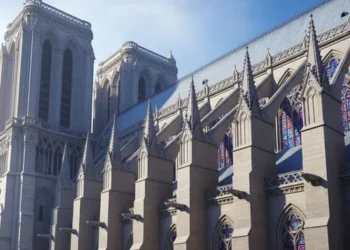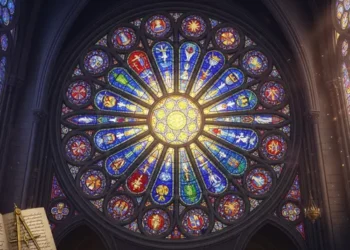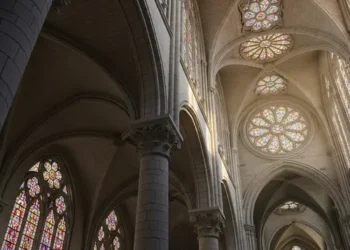


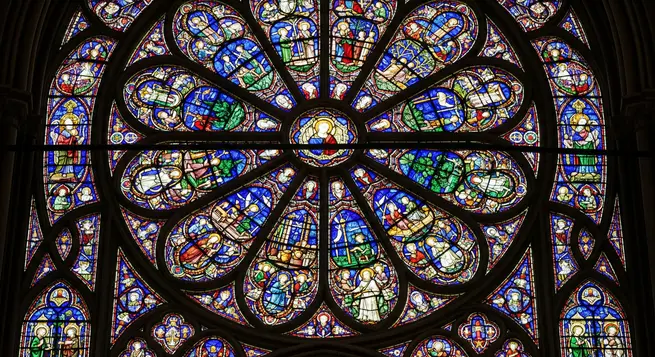

This quiz looks at the history and craft of medieval stained glass. These glowing windows are more than just decoration; they served as structural, educational, and artistic marvels in Gothic cathedrals.
You will see questions about the chemical additives that created vibrant blues and reds, the tools used by medieval artisans, and the architectural elements that held these massive glass walls together.
Once you finish, try visiting our pages on sacred architecture, review historic painting techniques, or see our trivia on architectural details.
What is the term for a circular window, traditionally decorated with stained glass, that is a characteristic feature of Gothic cathedrals?
Oriel window
Oriel window
Rose window
Rose window
Lancet window
Lancet window
Bay window
Bay window
What is the term for glass that has been colored throughout the melting process by adding metallic oxides?
Tempered glass
Tempered glass
Reflective glass
Reflective glass
Pot metal glass
Pot metal glass
Fiberglass
Fiberglass
In traditional medieval windows, what are the grooved strips of lead used to join individual pieces of glass called?
Zinc putty
Zinc putty
Steel nails
Steel nails
Copper wire
Copper wire
Lead cames
Lead cames
What metal oxide was traditionally used to create the famous deep blue glass featured at Chartres Cathedral?
Iron oxide
Iron oxide
Copper oxide
Copper oxide
Cobalt oxide
Cobalt oxide
Manganese oxide
Manganese oxide
What was the primary function of stained glass windows in medieval cathedrals?
To keep the building warm.
To keep the building warm.
To provide illumination and tell religious stories to a largely illiterate population.
To provide illumination and tell religious stories to a largely illiterate population.
To protect the interior from rain.
To protect the interior from rain.
To show off the wealth of the local peasants.
To show off the wealth of the local peasants.
What element, known as armatures or saddle bars, provided the necessary structural support for medieval stained glass windows?
Mortar putty
Mortar putty
Wooden beams
Wooden beams
Iron bars
Iron bars
Stone buttresses
Stone buttresses
What term describes the monochromatic painting technique used on stained glass to add detail and shading to figures?
Flash glass
Flash glass
Grisaille
Grisaille
Casting
Casting
Etching
Etching
Which famous French royal chapel is celebrated for being essentially a “glass cage” with walls made almost entirely of stained glass?
York Minster
York Minster
Chartres Cathedral
Chartres Cathedral
Canterbury Cathedral
Canterbury Cathedral
Sainte-Chapelle
Sainte-Chapelle
Which mineral additive is historically responsible for creating the deep, vibrant blue color in medieval glass?
Manganese oxide
Manganese oxide
Copper oxide
Copper oxide
Cobalt oxide
Cobalt oxide
Iron oxide
Iron oxide
Besides religious themes, what subjects were frequently depicted in the lower panels of medieval windows to represent the donor guilds or seasons?
The Life of Saints
The Life of Saints
Scenes of daily agricultural labor and trade
Scenes of daily agricultural labor and trade
Biblical narratives and genealogy
Biblical narratives and genealogy
Advanced astronomical charts
Advanced astronomical charts
Introduced in the 14th century, which technique allowed artists to paint yellow details on glass using silver compounds?
Lead glazing
Lead glazing
Copper flashing
Copper flashing
Silver stain
Silver stain
Gold dust
Gold dust
Which historical event in the late 18th century led to the destruction of many stained glass windows in France?
The Great Fire of London
The Great Fire of London
The Black Death
The Black Death
The French Revolution
The French Revolution
The Victorian Industrial Revolution which caused smog to damage them.
The Victorian Industrial Revolution which caused smog to damage them.
What technique involves applying a thin layer of highly colored glass over a much clearer base layer to allow for color removal?
Staining
Staining
Etching
Etching
Flashing
Flashing
Glazing
Glazing
To fuse the painted details permanently to the surface of the glass, the pieces must be fired in what type of equipment?
A blacksmith’s anvil
A blacksmith’s anvil
A hot torch
A hot torch
A kiln (furnace)
A kiln (furnace)
A water-cooled mold
A water-cooled mold
What is the specific name for the large, circular, multi-petaled stained glass windows found in Gothic cathedrals?
Triforium windows
Triforium windows
Oculus windows
Oculus windows
Lancet windows
Lancet windows
Rose windows
Rose windows
In which country did the most influential developments of Gothic stained glass architecture originate during the 12th century?
Spain
Spain
Germany
Germany
Italy
Italy
France
France
Under the patronage of Abbot Suger, which location is considered the birthplace of the Gothic style and its use of ‘lux nova’ (new light)?
Chartres Cathedral
Chartres Cathedral
Notre-Dame de Paris
Notre-Dame de Paris
Amiens Cathedral
Amiens Cathedral
St. Denis Basilica
St. Denis Basilica
Why were stained glass panels often installed with a bit of ‘play’ or clearance in their frames?
To allow the glass and lead to expand and contract with temperature changes.
To allow the glass and lead to expand and contract with temperature changes.
To prevent the window from rattling during high winds.
To prevent the window from rattling during high winds.
To reduce the amount of lead cames needed for the window.
To reduce the amount of lead cames needed for the window.
To allow air to circulate through the panel for indoor ventilation.
To allow air to circulate through the panel for indoor ventilation.
What is the famous stained glass window panel at Chartres Cathedral that survived a catastrophic 1194 fire and features a prominent blue Madonna?
The ‘Tree of Jesse’
The ‘Tree of Jesse’
The ‘Chartres Labyrinth’
The ‘Chartres Labyrinth’
The ‘Royal Portal’
The ‘Royal Portal’
The ‘Belle Verrière’
The ‘Belle Verrière’
After the glass pieces are fitted into the lead cames, what is melted to join the intersections of the cames?
Beeswax
Beeswax
Glazing putty
Glazing putty
Solder
Solder
Mortar
Mortar
Who was the primary artisan responsible for the overall design and creation of a medieval window?
The town’s architect
The town’s architect
The head carpenter
The head carpenter
The local bishop
The local bishop
The master glazier
The master glazier
Why, in many medieval windows, is red glass often found in thinner pieces or used more sparingly than blues or greens?
Red glass was prone to cracking immediately when cut.
Red glass was prone to cracking immediately when cut.
Red was considered a forbidden color by the church.
Red was considered a forbidden color by the church.
Red glass was the easiest to make.
Red glass was the easiest to make.
Red glass was used sparingly because color saturation was difficult to control during firing.
Red glass was used sparingly because color saturation was difficult to control during firing.
You can do better
Not bad
Great!
If you enjoyed this, study architectural styles, find trivia on famous buildings, or visit historic places next.