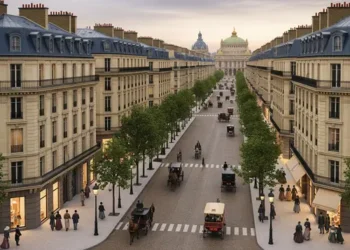


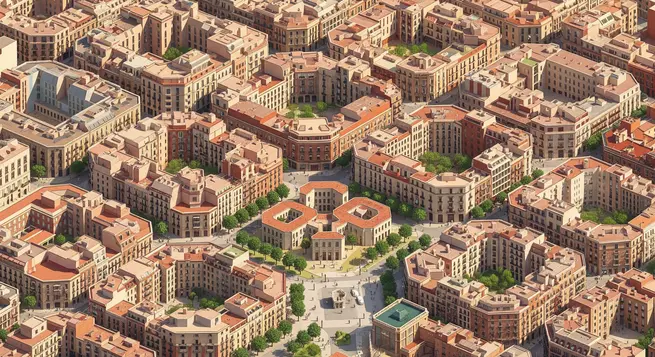

Barcelona owes its iconic octagonal grid to Ildefons Cerdà, the visionary engineer who planned this 19th-century expansion. Known as the Eixample, this unique district represents groundbreaking concepts in city planning.
This quiz looks at the engineering, social goals, and architectural elements that defined Cerdà’s work, including the chamfered corners and modern superblock initiatives.
When you finish, read about urban design, explore cities of the world, or learn about famous architects.
In which Spanish autonomous community is Cerdà’s famous extension district located?
Madrid
Madrid
Catalonia
Catalonia
Andalusia
Andalusia
Valencia
Valencia
What is the literal English translation of the Catalan word ‘Eixample’?
Example
Example
Square
Square
Extension
Extension
Intersection
Intersection
In which year was the Cerdà Plan officially approved for the expansion of Barcelona?
1863
1863
1855
1855
1859
1859
1867
1867
What is the defining geometric feature of the grid’s intersections, known as ‘xamfrà’ in Catalan?
Cul-de-sacs
Cul-de-sacs
Chamfered corners
Chamfered corners
Rotunda junctions
Rotunda junctions
High-speed loops
High-speed loops
What was the original principal engineering reason Cerdà introduced chamfered corners?
To honor military fortification patterns
To honor military fortification patterns
To block wind tunnels through the city
To block wind tunnels through the city
To increase tax revenue from sidewalk space
To increase tax revenue from sidewalk space
To accommodate the turning radius of steam trams
To accommodate the turning radius of steam trams
What defines a ‘superblock’ (superilla) in the context of modern urban planning in Barcelona?
A single, ultra-tall skyscraper building block
A single, ultra-tall skyscraper building block
A rectangular block formed by grouping multiple grid units
A rectangular block formed by grouping multiple grid units
A park designed for outdoor public music concerts
A park designed for outdoor public music concerts
An underground transit hub for local trains
An underground transit hub for local trains
What primary social objectives motivated Cerdà’s urbanistic approach?
Restrictive military control and defense
Restrictive military control and defense
Maximizing land value for private developers
Maximizing land value for private developers
Luxury tourism and commercial isolation
Luxury tourism and commercial isolation
Industrialization, hygiene, and social equality
Industrialization, hygiene, and social equality
Ildefons Cerdà is credited with coining which term to describe the scientific study of cities?
Urbanization
Urbanization
Modernism
Modernism
Neoclassicism
Neoclassicism
Constructivism
Constructivism
What were the characteristic features of Cerdà’s planned city blocks?
Strictly prohibited interior garden courtyards
Strictly prohibited interior garden courtyards
Radial starburst patterns centered on the port
Radial starburst patterns centered on the port
Winding, labyrinthine medieval-style paths
Winding, labyrinthine medieval-style paths
Square blocks, wide streets, and open spaces
Square blocks, wide streets, and open spaces
What major structural change to the city was necessary before Cerdà’s plan could be implemented?
The removal of city walls to allow expansion
The removal of city walls to allow expansion
The strict preservation of medieval defensive towers
The strict preservation of medieval defensive towers
The relocation of the city to a new site inland
The relocation of the city to a new site inland
The banning of all private vehicles in the city center
The banning of all private vehicles in the city center
The term ‘Eixample’ translates to what word in English?
Olympic Village
Olympic Village
Expansion
Expansion
Gothic Revival
Gothic Revival
Baroque urban renewal
Baroque urban renewal
In the Cerdà grid, the chamfered corners of the blocks are typically cut at an angle of how many degrees to the street?
60 degrees
60 degrees
45 degrees
45 degrees
30 degrees
30 degrees
90 degrees
90 degrees
What is the core focus of the modern ‘superblock’ (superilles) initiative in Barcelona?
Increasing commercial parking spaces underground
Increasing commercial parking spaces underground
Improving tourist access to the city beach areas
Improving tourist access to the city beach areas
Segregating residential zones from merchant zones
Segregating residential zones from merchant zones
Traffic reduction and increased green space within the grid
Traffic reduction and increased green space within the grid
What was the secondary health purpose of keeping the central part of the grid blocks relatively empty or open?
Creating room for underground utility lines
Creating room for underground utility lines
Standardizing property sizes for merchants
Standardizing property sizes for merchants
Ventilation and sunlight access for residents
Ventilation and sunlight access for residents
Providing aesthetic variety to the architecture
Providing aesthetic variety to the architecture
What was Ildefons Cerdà’s professional background?
Medical Doctor
Medical Doctor
Architect
Architect
Civil Engineer
Civil Engineer
Landscape Painter
Landscape Painter
Cerdà’s ‘General Theory of Urbanization’ emphasized which of the following goals?
Prioritizing commercial shopping districts over homes
Prioritizing commercial shopping districts over homes
Maintaining a rigid geometric hierarchy of streets
Maintaining a rigid geometric hierarchy of streets
Promoting social integration through physical space equality
Promoting social integration through physical space equality
Maximizing traffic flow for private automobiles
Maximizing traffic flow for private automobiles
Which statement accurately reflects the reception of Cerdà’s design during his life?
The design was based on the layout of Ancient Rome
The design was based on the layout of Ancient Rome
The city authorities immediately adopted his plan fully
The city authorities immediately adopted his plan fully
The grid system was initially criticized for being too monotonous
The grid system was initially criticized for being too monotonous
Cerdà was a wealthy aristocrat who sought royal favor
Cerdà was a wealthy aristocrat who sought royal favor
The streets of the Cerdà grid in the Eixample are predominantly aligned along which orientation?
Radial diagonals starting from the coast
Radial diagonals starting from the coast
Cardinal North-South and East-West axes
Cardinal North-South and East-West axes
Concentric circular arcs surrounding the old city
Concentric circular arcs surrounding the old city
Northwest-Southeast and Northeast-Southwest axes
Northwest-Southeast and Northeast-Southwest axes
How was the Cerdà plan selected for the expansion of Barcelona?
A private coalition of local industrial landowners voted to implement his plan
A private coalition of local industrial landowners voted to implement his plan
It was chosen by a democratic referendum of the citizens of Barcelona
It was chosen by a democratic referendum of the citizens of Barcelona
The Spanish central government imposed it by royal decree, overriding the local council’s chosen competition winner
The Spanish central government imposed it by royal decree, overriding the local council’s chosen competition winner
It was selected as the winner of a public design competition held by the Barcelona City Council
It was selected as the winner of a public design competition held by the Barcelona City Council
Cerdà’s innovative vision for the Eixample included which feature regarding infrastructure?
Homes were designed to face inward towards the street only
Homes were designed to face inward towards the street only
Utility lines were placed in subterranean galleries below the sidewalks
Utility lines were placed in subterranean galleries below the sidewalks
All blocks were required to be exactly one hundred meters by one hundred meters in size
All blocks were required to be exactly one hundred meters by one hundred meters in size
Each street corner was designated as a public market square
Each street corner was designated as a public market square
What feature did Cerdà include in his grid plan to connect the old city to outlying towns?
Avenue A and Avenue B crossed in the center of the grid
Avenue A and Avenue B crossed in the center of the grid
Gran Via de les Corts Catalanes
Gran Via de les Corts Catalanes
The Ring Road surrounding the entire district
The Ring Road surrounding the entire district
Diagonal Avenues that cut through the grid at an angle
Diagonal Avenues that cut through the grid at an angle
How did Cerdà envision the social impact of his district design?
Modern developers have completely replaced the grid with circular towers over time
Modern developers have completely replaced the grid with circular towers over time
The grid is criticized for destroying historic landmarks during construction
The grid is criticized for destroying historic landmarks during construction
The grid successfully integrated distinct social classes within the same quarters
The grid successfully integrated distinct social classes within the same quarters
The original plan strictly forbade any construction height above two stories
The original plan strictly forbade any construction height above two stories
You can do better
Not bad
Great!
If you enjoyed this, try our trivia on architectural details, famous streets and squares, or historic places.