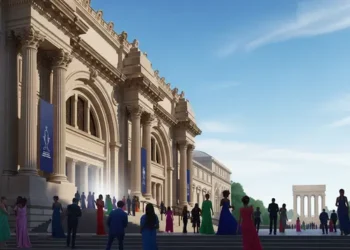



The Museo del Prado in Madrid is one of the world’s premier art institutions. This trivia set focuses on its rich history, building designs, and the brilliant minds who filled its halls with color.
You will see questions about famous Spanish painters, the museum’s neoclassical origins, and how this collection grew over the centuries. Some queries cover basic facts, while others ask about smaller details.
When you finish, try our trivia on other museums and galleries, check out famous artists, or learn about classic masterpieces.
In which Spanish city is the Museo del Prado located?
Seville
Seville
Barcelona
Barcelona
Madrid
Madrid
Bilbao
Bilbao
In what year was the Museo del Prado officially opened to the public?
1829
1829
1819
1819
1809
1809
1839
1839
Which artist painted ‘Las Meninas’, arguably the most famous work in the Prado’s collection?
Francisco Goya
Francisco Goya
Bartolomé Esteban Murillo
Bartolomé Esteban Murillo
Diego Velázquez
Diego Velázquez
El Greco
El Greco
What is the primary architectural style of the original Prado building designed by Juan de Villanueva?
Baroque
Baroque
Neoclassical
Neoclassical
Modernist
Modernist
Gothic
Gothic
Which Spanish monarch and his wife, Queen Maria Isabel of Braganza, were responsible for the museum’s founding?
Ferdinand VII
Ferdinand VII
Philip IV
Philip IV
Charles III
Charles III
Charles V
Charles V
Which Goya masterpiece depicts the execution of Spanish resistance fighters by French troops?
The Clothed Maja
The Clothed Maja
The Third of May 1808
The Third of May 1808
Saturn Devouring His Son
Saturn Devouring His Son
The Black Paintings
The Black Paintings
Which architect designed the major 2007 expansion of the museum?
Rafael Moneo
Rafael Moneo
Frank Gehry
Frank Gehry
Santiago Calatrava
Santiago Calatrava
Norman Foster
Norman Foster
Which famous triptych by Hieronymus Bosch is considered a highlight of the Prado’s non-Spanish collection?
The Garden of Earthly Delights
The Garden of Earthly Delights
The Descent from the Cross
The Descent from the Cross
The Triumph of Death
The Triumph of Death
The Arnolfini Portrait
The Arnolfini Portrait
What is the collective name for the series of 14 dark and haunting works that Goya painted directly onto the walls of his house?
The Black Paintings
The Black Paintings
The Disasters of War sketches
The Disasters of War sketches
The Caprichos series
The Caprichos series
The Royal Tapestry Cartoons
The Royal Tapestry Cartoons
Who was the original architect commissioned by King Charles III to design the building that became the Prado?
José de Hermosilla
José de Hermosilla
Francisco Sabatini
Francisco Sabatini
Juan de Villanueva
Juan de Villanueva
Ventura Rodríguez
Ventura Rodríguez
Which artist, often associated with the tenebrist style, has a significant number of works in the Prado, including ‘The Martyrdom of Saint Philip’?
Bartolomé Esteban Murillo
Bartolomé Esteban Murillo
Diego Velázquez
Diego Velázquez
Jusepe de Ribera
Jusepe de Ribera
Francisco de Zurbarán
Francisco de Zurbarán
The site of the Prado was originally intended to be a cabinet of natural history before it was repurposed following its damage during which 19th-century conflict?
The Spanish-American War
The Spanish-American War
The Trienio Liberal
The Trienio Liberal
The Carlist Wars
The Carlist Wars
The Peninsular War
The Peninsular War
Who is the central figure portrayed as a young child in the foreground of Velázquez’s ‘Las Meninas’?
Queen Isabella of Bourbon
Queen Isabella of Bourbon
Infanta María Teresa
Infanta María Teresa
Queen Mariana of Austria
Queen Mariana of Austria
Infanta Margarita Teresa
Infanta Margarita Teresa
The Prado’s modern expansion project ultimately incorporated the renovation of which historic building that previously served as a palace?
The Imperial Gallery
The Imperial Gallery
The Hall of Realms
The Hall of Realms
The Grand Salon
The Grand Salon
The Gallery of Mirrors
The Gallery of Mirrors
Which famous Velázquez painting, depicting a military surrender, is also known as ‘Las Lanzas’?
Portrait of Innocent X
Portrait of Innocent X
The Surrender of Breda
The Surrender of Breda
The Rokeby Venus
The Rokeby Venus
The Spinners
The Spinners
In Velázquez’s equestrian portraits, which powerful advisor to King Philip IV is depicted on a rearing horse?
Cardinal Infante Ferdinand
Cardinal Infante Ferdinand
Count-Duke of Olivares
Count-Duke of Olivares
Balthasar Charles
Balthasar Charles
King Philip IV
King Philip IV
The foundation of the Prado was primarily based on the extensive holdings of which source?
Confiscated Napoleonic loot
Confiscated Napoleonic loot
The Royal Collection
The Royal Collection
Donations from private nobility
Donations from private nobility
The Church collection
The Church collection
While better known for his late masterpieces, Goya’s earliest documented painting was acquired by the Prado in 2021. What is this painting called?
Hannibal Victorious
Hannibal Victorious
The Milkmaid of Bordeaux
The Milkmaid of Bordeaux
Tobias and the Angel
Tobias and the Angel
The Countess of Chinchón
The Countess of Chinchón
The ‘Cube of the Prado’ refers specifically to which architectural addition?
The 2005 subterranean expansion project
The 2005 subterranean expansion project
The 2009 subterranean expansion project
The 2009 subterranean expansion project
The 2007 subterranean expansion project
The 2007 subterranean expansion project
The 2003 subterranean expansion project
The 2003 subterranean expansion project
Outside of the Spanish school, the Prado holds a world-renowned collection of which northern European school, featuring masterpieces by Hieronymus Bosch and Peter Paul Rubens?
Dutch painters
Dutch painters
French painters
French painters
German painters
German painters
Flemish painters
Flemish painters
Which artist, famous for his elongated figures and spiritual intensity, is represented by important works such as ‘The Nobleman with his Hand on his Chest’ at the Prado?
Francisco de Goya
Francisco de Goya
El Greco
El Greco
Bartolomé Esteban Murillo
Bartolomé Esteban Murillo
Diego Velázquez
Diego Velázquez
Which two artists are traditionally considered the heavyweights of the Spanish Golden Age and the late eighteenth-century periods, respectively, within the Prado Museum’s narrative?
Pacheco and Carducho
Pacheco and Carducho
Murillo and Coello
Murillo and Coello
Ribera and Zurbarán
Ribera and Zurbarán
Velázquez and Goya
Velázquez and Goya
You can do better
Not bad
Great!
If you love history and design, try our trivia on historic places, architectural styles, or art movements.