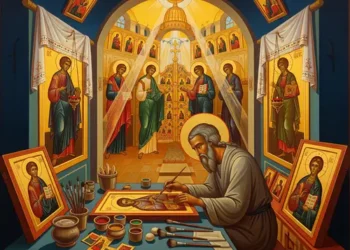


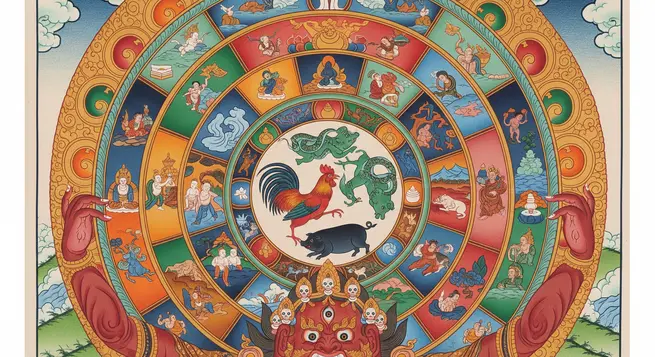
Traditional Thangka paintings are much more than beautiful scrolls; they serve as important spiritual maps in Tibetan Buddhism. This quiz explores the rich history, spiritual purposes, and strict guidelines behind their creation.
You will see questions about the symbolic Wheel of Life, the distinct pigments used for color, and how artists depict wrathful versus peaceful deities. Some questions focus on common layout patterns like mandalas and consecration rituals.
If you enjoy this, check out our quizzes on regional art, see how elements function as symbols in art, or understand historical painting techniques.
What is a traditional thangka?
A scroll painting
A scroll painting
A clay mask
A clay mask
A wooden chair
A wooden chair
A stone carving
A stone carving
Thangka paintings are an art form most closely associated with the religious traditions of which region?
Sanskrit
Sanskrit
Hindi
Hindi
Tibetan
Tibetan
Pali
Pali
What is the primary spiritual purpose of using a thangka in Buddhist practice?
To provide heat in winter
To provide heat in winter
To hang in museums only
To hang in museums only
To document royal taxes
To document royal taxes
To serve as a meditation aid
To serve as a meditation aid
What are most traditional thangkas painted upon?
Stretched animal skin
Stretched animal skin
Cotton or silk fabric
Cotton or silk fabric
Cast iron sheet
Cast iron sheet
Hardwood panel
Hardwood panel
What does the “Wheel of Life” painting primarily symbolize in Tibetan Buddhism?
The cyclic nature of existence
The cyclic nature of existence
The migration of nomadic tribes
The migration of nomadic tribes
The Four Noble Truths
The Four Noble Truths
The history of local kings
The history of local kings
What materials are traditionally used to create the vibrant colors of a thangka?
Mineral pigments and gold leaf
Mineral pigments and gold leaf
Charcoal and lead pencils
Charcoal and lead pencils
Acrylic synthetic paint
Acrylic synthetic paint
Spray paint and markers
Spray paint and markers
Which figure is most commonly depicted holding the Wheel of Life?
Padmasambhava
Padmasambhava
Yama (the Lord of Death)
Yama (the Lord of Death)
Avalokiteshvara
Avalokiteshvara
White Tara
White Tara
What dictates the precise proportions and attributes of deities in a thangka?
Sacred geometry and canonical texts (iconography)
Sacred geometry and canonical texts (iconography)
The patron’s personal portrait request
The patron’s personal portrait request
The artist’s imagination
The artist’s imagination
The latest trends in fine art auctions
The latest trends in fine art auctions
What do the three animals in the center of the Wheel of Life (the cock, the snake, and the pig) represent?
Spring, summer, and autumn
Spring, summer, and autumn
Wealth, health, and power
Wealth, health, and power
Love, peace, and meditation
Love, peace, and meditation
Ignorance, attachment, and aversion
Ignorance, attachment, and aversion
A common type of thangka that represents a complex, symmetrical diagram of the cosmos is known as a:
Totem pole
Totem pole
Zen garden
Zen garden
Stained glass window
Stained glass window
Mandala
Mandala
Which of these physical attributes is uniquely characteristic of a wrathful deity, as opposed to a peaceful deity, in a thangka?
A crown of five jewels
A crown of five jewels
A crown of five skulls
A crown of five skulls
A relaxed, meditative seated posture (dhyanasana)
A relaxed, meditative seated posture (dhyanasana)
A serene, smiling facial expression
A serene, smiling facial expression
What is the practice of “yidam” meditation in relation to thangkas?
To display artistic skill during festivals
To display artistic skill during festivals
To decorate the walls of palace living quarters
To decorate the walls of palace living quarters
To focus the mind on the deity’s qualities for visualization practice
To focus the mind on the deity’s qualities for visualization practice
To act as a map for mountain travelers
To act as a map for mountain travelers
In thangka iconography, which color-element association is generally attributed to the element characterized by stability or earth?
White representing water
White representing water
Yellow representing earth
Yellow representing earth
Blue representing space
Blue representing space
Red representing fire
Red representing fire
What process is typically required to “consecrate” or activate a newly finished thangka for religious use?
It must be framed in heavy iron for protection
It must be framed in heavy iron for protection
It must be signed by the artist on the front
It must be signed by the artist on the front
It must be blessed by a high-ranking lama
It must be blessed by a high-ranking lama
It must be painted on black velvet exclusively
It must be painted on black velvet exclusively
What does the middle circle of the Wheel of Life depict?
Heaven, Earth, and Underworld
Heaven, Earth, and Underworld
The eightfold path of liberation
The eightfold path of liberation
Greed, hatred, and obsession
Greed, hatred, and obsession
The six realms of rebirth
The six realms of rebirth
What is the term for the precise symbolic hand gestures depicted in thangka figures?
Kora
Kora
Mudra
Mudra
Asana
Asana
Prana
Prana
What core Buddhist teaching is represented by the outermost rim of the Wheel of Life?
The Three Jewels
The Three Jewels
The Noble Eightfold Path
The Noble Eightfold Path
Dependent origination
Dependent origination
The Four Noble Truths
The Four Noble Truths
What is a distinctive feature of a finished, traditional thangka presentation?
Brocade framing surrounds the painting
Brocade framing surrounds the painting
They cannot be rolled up like scrolls
They cannot be rolled up like scrolls
They are typically painted on paper only
They are typically painted on paper only
They are always painted on canvas stretched over wooden frames
They are always painted on canvas stretched over wooden frames
Which of these is a traditional physical component of a complete, wall-hanging thangka?
A plastic clip-on frame
A plastic clip-on frame
A protective silk veil draped over the front of the painting
A protective silk veil draped over the front of the painting
A protective sheet of anti-reflective glass
A protective sheet of anti-reflective glass
A rigid backing board made of plywood
A rigid backing board made of plywood
Some advanced thangkas serve as educational tools to depict what concept regarding consciousness?
The evolution of writing systems in Central Asia
The evolution of writing systems in Central Asia
The state of ‘Bardo’ or intermediate state between lives
The state of ‘Bardo’ or intermediate state between lives
The political boundaries of ancient Asian empires
The political boundaries of ancient Asian empires
The geological formation of the Himalayan mountain range
The geological formation of the Himalayan mountain range
The act of painting a thangka by an artist is often considered what kind of spiritual undertaking?
An expression of the Six Paramitas (Perfections)
An expression of the Six Paramitas (Perfections)
A requirement for all monks upon ordination
A requirement for all monks upon ordination
A way to show defiance against political adversaries
A way to show defiance against political adversaries
A method of earning income for monasteries
A method of earning income for monasteries
Which practice is essential for maintaining accuracy in thangka iconography?
Using a magnifying glass to check for perfect symmetry
Using a magnifying glass to check for perfect symmetry
Using a pencil to sketch directly on the silk permanently before painting
Using a pencil to sketch directly on the silk permanently before painting
Strict adherence to a grid system for all subjects
Strict adherence to a grid system for all subjects
Ignoring all traditional artistic rules in favor of free expression
Ignoring all traditional artistic rules in favor of free expression
The structure and intent of the Mandala thangka is meant to lead the practitioner toward reflecting on what fundamental philosophical concept?
Emptiness (Shunyata) and interdependence
Emptiness (Shunyata) and interdependence
Individual self-identity and permanence
Individual self-identity and permanence
Physical pleasure and material possession
Physical pleasure and material possession
Authority and hierarchy within the universe
Authority and hierarchy within the universe
Beyond the six realms, what is another primary didactic use of the Wheel of Life in temple murals?
To map the path of sentient beings through various states of existence and rebirth
To map the path of sentient beings through various states of existence and rebirth
To show the relative size of different countries
To show the relative size of different countries
To record the genealogy of the Dalai Lama lineages
To record the genealogy of the Dalai Lama lineages
To track the movement of the stars and constellations
To track the movement of the stars and constellations
What is the standard longevity and handling expectation for traditional thangkas?
They are forbidden to be shown to the public
They are forbidden to be shown to the public
They must be discarded after one use
They must be discarded after one use
They are meant to be durable and passed down for generations
They are meant to be durable and passed down for generations
They are only created during lunar eclipses
They are only created during lunar eclipses
You can do better
Not bad
Great!
Explore other cultures and styles. Test yourself on sacred architecture, read about art curiosities, or look through our general art section.