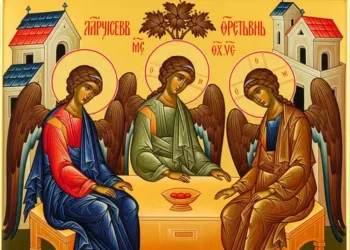


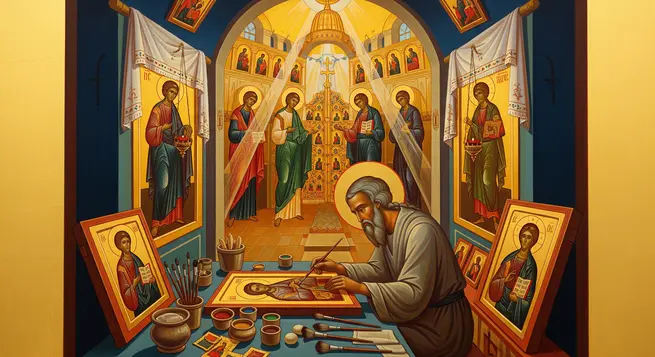

Traditional Russian icon painting combines religious devotion with strict artistic rules. This quiz examines the rich history, techniques, and theology behind these sacred masterpieces, particularly the legendary works of Andrei Rublev.
You will see questions about traditional materials like egg tempera, theological concepts, and the unique perspective used by medieval master painters. Some questions are straightforward, while others focus on lesser-known technical details.
When you finish, try exploring our other quizzes. Learn more about symbols in art, test your knowledge on famous artists, or read up on sacred architecture.
What traditional material serves as the primary base for a Russian icon?
Metal sheet
Metal sheet
Stone slab
Stone slab
Wood panel
Wood panel
Canvas
Canvas
Andrei Rublev’s most famous masterpiece depicts which scene from the Old Testament?
The Virgin Mary
The Virgin Mary
The Last Judgment
The Last Judgment
The Gospel writers
The Gospel writers
The Holy Trinity
The Holy Trinity
In Orthodox theology, what is the specific term for the act of honoring and showing reverence to an icon?
Exaltation
Exaltation
Repentance
Repentance
Veneration
Veneration
Meditation
Meditation
Which type of paint, mixed with egg yolk, is traditionally used in icon writing?
Watercolors
Watercolors
Tempera
Tempera
Acrylics
Acrylics
Oil paints
Oil paints
In iconography, what does the application of gold leaf primarily represent?
The Divine Light
The Divine Light
The historical accuracy of the figures
The historical accuracy of the figures
Sunlight reflecting off the iconostasis
Sunlight reflecting off the iconostasis
Royal wealth
Royal wealth
What collection of strict rules and patterns dictates how a saint or biblical scene must be portrayed?
The Podlinnik (the painter’s guide)
The Podlinnik (the painter’s guide)
The Church calendar
The Church calendar
The desires of the patron
The desires of the patron
The artist’s imagination
The artist’s imagination
What is an iconostasis in an Orthodox church?
An intricately carved screen separating the altar from the nave
An intricately carved screen separating the altar from the nave
A special piece of vestment worn by the priest
A special piece of vestment worn by the priest
A bowl of water used for baptism
A bowl of water used for baptism
A set of candles
A set of candles
Russian icon painting historically evolved from which tradition?
Renaissance realism
Renaissance realism
Impressionist painting
Impressionist painting
Gothic architecture
Gothic architecture
Byzantine art
Byzantine art
Who or what do the three central figures in Rublev’s ‘Trinity’ represent?
The three angels visiting Abraham
The three angels visiting Abraham
The Baptism of Christ
The Baptism of Christ
The Entry into Jerusalem
The Entry into Jerusalem
The Transfiguration on Mount Tabor
The Transfiguration on Mount Tabor
What is the primary aesthetic purpose of using a flat, gold background in an icon?
To protect the paint from moisture
To protect the paint from moisture
To provide the figures with a sense of realism
To provide the figures with a sense of realism
To highlight the skill of the craftsman
To highlight the skill of the craftsman
To emphasize that the scene takes place in a transcendent, heavenly space
To emphasize that the scene takes place in a transcendent, heavenly space
How is perspective typically employed in traditional Russian iconography?
Perspective is ignored entirely in favor of flat colors
Perspective is ignored entirely in favor of flat colors
Perspective is ‘inverse’, drawing the viewer toward the holiness of the subject
Perspective is ‘inverse’, drawing the viewer toward the holiness of the subject
Perspective is used to mimic the architecture of the church building
Perspective is used to mimic the architecture of the church building
Perspective is used to draw the viewer into the image
Perspective is used to draw the viewer into the image
Which of these titles best describes the life of Andrei Rublev?
A bishop focused on church architecture
A bishop focused on church architecture
A royal painter for the Tsar
A royal painter for the Tsar
An itinerant artist from the West
An itinerant artist from the West
A monk in the Trinity-St. Sergius Monastery
A monk in the Trinity-St. Sergius Monastery
Which statement best describes the Orthodox view of the role of an icon painter?
A historian recording the physical appearance of saints
A historian recording the physical appearance of saints
A prophet revealing divine truth through a strict process
A prophet revealing divine truth through a strict process
An artist primarily focused on creating a standard portrait
An artist primarily focused on creating a standard portrait
A teacher of geometric proportion and mathematics
A teacher of geometric proportion and mathematics
What technique is commonly used to depict divine light in traditional icon faces?
Adding individualistic flair to the faces of the saints
Adding individualistic flair to the faces of the saints
The slow, methodical process of starting with dark tones and building to light
The slow, methodical process of starting with dark tones and building to light
Using bright synthetic colors to attract attention
Using bright synthetic colors to attract attention
Mixing metallic powders into the paint base
Mixing metallic powders into the paint base
What is the symbolic meaning of the halo (nimbus) encircling a saint’s head on an icon?
To frame the saint during the miracle of incarnation
To frame the saint during the miracle of incarnation
To help identify the subject from a distance in a dark church
To help identify the subject from a distance in a dark church
To signify the subject’s earthly rank
To signify the subject’s earthly rank
To denote the holiness and sanctity of the figure represented
To denote the holiness and sanctity of the figure represented
Which master painter from Byzantium was a mentor to Andrei Rublev?
Dionysius the Areopagite
Dionysius the Areopagite
Simon Ushakov
Simon Ushakov
Daniil Chyorny
Daniil Chyorny
Theophanes the Greek
Theophanes the Greek
Which concept best summarizes the theological view of icons in the Orthodox Church?
The icon is an idol that must be worshipped in its own right
The icon is an idol that must be worshipped in its own right
The icon is the actual body of the saint
The icon is the actual body of the saint
The icon is a mere educational tool like a classroom diagram
The icon is a mere educational tool like a classroom diagram
The icon is a window to the divine, providing a spiritual connection to the subject
The icon is a window to the divine, providing a spiritual connection to the subject
What is an essential component required for an icon to be considered ‘canonically complete’?
The age of the wood panel
The age of the wood panel
The geographical location where the icon was painted
The geographical location where the icon was painted
The specific shade of blue used in the pigments
The specific shade of blue used in the pigments
The presence of the saint’s name, often in abbreviated Church Slavonic
The presence of the saint’s name, often in abbreviated Church Slavonic
How are the events portrayed in icons typically perceived by the Orthodox faithful?
They are viewed as allegorical fables
They are viewed as allegorical fables
They are viewed as objective accounts of divine reality
They are viewed as objective accounts of divine reality
They are viewed as subjective interpretations of the Bible
They are viewed as subjective interpretations of the Bible
They are viewed as historical scenes
They are viewed as historical scenes
During which century is Andrei Rublev’s ‘Trinity’ generally dated?
16th century
16th century
17th century
17th century
15th century
15th century
14th century
14th century
What is ‘olifa’ in the context of Russian icon tradition?
An ancient mineral pigment found only in Russian caves
An ancient mineral pigment found only in Russian caves
A complex prayer cycle recited while painting the features of the subject
A complex prayer cycle recited while painting the features of the subject
A resin-based varnish applied to protect the icon after it is completed and blessed
A resin-based varnish applied to protect the icon after it is completed and blessed
A specific technique for polishing the gold leaf until it shines like a mirror
A specific technique for polishing the gold leaf until it shines like a mirror
In the medieval tradition of Russian icon painting, how is authorship usually treated?
The artist remains anonymous, as the work is considered a collective prayer of the Church
The artist remains anonymous, as the work is considered a collective prayer of the Church
The artist only adds their initials at the very bottom corner
The artist only adds their initials at the very bottom corner
The artist is always identified in large bold lettering
The artist is always identified in large bold lettering
The artist incorporates a hidden self-portrait as a watermark
The artist incorporates a hidden self-portrait as a watermark
You can do better
Not bad
Great!
If you enjoyed this quiz, we have plenty more to offer. Check out our quizzes on painting techniques, study historical masterpieces, or browse our section on art.