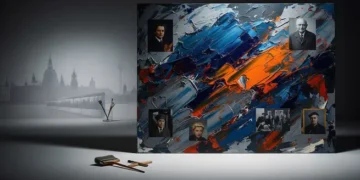


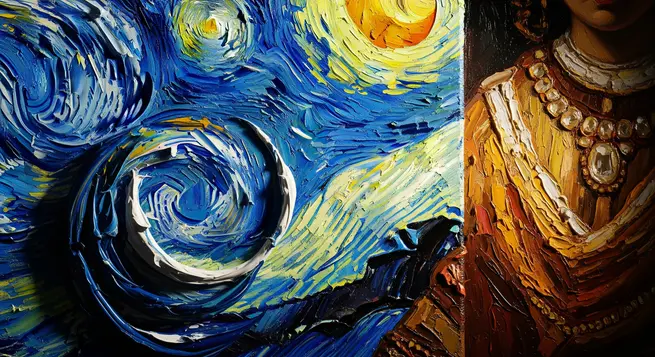
This quiz looks at impasto, the classic painting technique where paint is applied thickly to a canvas. Artists use this heavy texture to make their work pop and capture light in unique ways.
You will see questions about the tools used for this method, conservation challenges, and how Dutch masters used texture. Some questions examine how thick brushstrokes change the canvas itself.
When you finish, check out our trivia on painting techniques. You can also explore queries about famous artists or test your eye on historic masterpieces.
What does the term ‘impasto’, derived from Italian, literally refer to in painting?
Thick paint application
Thick paint application
Watery paint thinning
Watery paint thinning
A type of canvas preparation
A type of canvas preparation
A specific brush shape
A specific brush shape
What is a primary visual effect of using the impasto technique?
To make the painting lightweight
To make the painting lightweight
To ensure the paint dries instantly
To ensure the paint dries instantly
To create a three-dimensional, tactile surface
To create a three-dimensional, tactile surface
To allow the artist to use less pigment
To allow the artist to use less pigment
Which tool is most commonly associated with applying paint in an impasto style?
A soft-tipped foam sponge
A soft-tipped foam sponge
A fine-point drafting pen
A fine-point drafting pen
A thin watercolor wash
A thin watercolor wash
A palette knife or stiff-bristled brush
A palette knife or stiff-bristled brush
Which 17th-century Dutch master famously used impasto to highlight textures such as fabric or jewelry in his portraits?
Sandro Botticelli
Sandro Botticelli
Salvador Dalí
Salvador Dalí
Rembrandt van Rijn
Rembrandt van Rijn
Claude Monet
Claude Monet
Which description best characterizes Vincent van Gogh’s signature brushstroke style?
Vibrant, directional, and thick brushwork
Vibrant, directional, and thick brushwork
Smooth, invisible brushstrokes
Smooth, invisible brushstrokes
Thin, transparent glazes
Thin, transparent glazes
Flat fields of monochromatic color
Flat fields of monochromatic color
Impasto is most easily achieved using which type of paint due to its slow-drying and heavy-bodied nature?
Oil paint
Oil paint
Tempera paint
Tempera paint
Encaustic paint
Encaustic paint
Watercolor paint
Watercolor paint
Which painting by van Gogh is renowned for its swirling, highly textured sky created with heavy impasto?
The Girl with a Pearl Earring
The Girl with a Pearl Earring
The Starry Night
The Starry Night
The School of Athens
The School of Athens
Las Meninas
Las Meninas
How did Rembrandt often combine impasto with other techniques?
He only painted with flat, smooth layers
He only painted with flat, smooth layers
He avoided using bright colors altogether
He avoided using bright colors altogether
He exclusively used thick paint for large landscape backgrounds
He exclusively used thick paint for large landscape backgrounds
He applied translucent glazes over the thick paint layers
He applied translucent glazes over the thick paint layers
Modern critics often argue that van Gogh utilized impasto for what purpose?
To keep the canvas from bending
To keep the canvas from bending
To mask mistakes made earlier in the painting process
To mask mistakes made earlier in the painting process
To create a strictly two-dimensional look
To create a strictly two-dimensional look
To add emotional intensity and physical presence
To add emotional intensity and physical presence
What is a conservation-related challenge associated with thick impasto layers?
It is dangerous for the artist to touch the wet paint
It is dangerous for the artist to touch the wet paint
It makes the paint prone to cracking over time
It makes the paint prone to cracking over time
It requires the painting to be kept in total darkness
It requires the painting to be kept in total darkness
It makes the frame heavier
It makes the frame heavier
How does the relief of impasto affect the way a painting interacts with light in a room?
They reduce the need for varnish entirely
They reduce the need for varnish entirely
They increase the surface area that catches light
They increase the surface area that catches light
They neutralize the color of the paint underneath
They neutralize the color of the paint underneath
They make the canvas effectively transparent
They make the canvas effectively transparent
Which art movement, noted for its focus on light and atmosphere, frequently employed impasto textures?
Minimalism
Minimalism
Impressionism
Impressionism
Surrealism
Surrealism
Neoclassicism
Neoclassicism
How might an artist effectively increase the body of paint to achieve a more pronounced impasto effect?
By applying paint only to wet canvas
By applying paint only to wet canvas
By mixing wax or thickening agents into the pigment
By mixing wax or thickening agents into the pigment
By using industrial-grade metal scrapers
By using industrial-grade metal scrapers
By using cold storage techniques
By using cold storage techniques
Where can one particularly observe Rembrandt’s mastery of using raised highlights of paint to mimic light?
His Self-Portraits, reflecting light on skin or metallic armor
His Self-Portraits, reflecting light on skin or metallic armor
His drawings of anatomical studies
His drawings of anatomical studies
His early works, which focused strictly on thin, watercolor-like washes
His early works, which focused strictly on thin, watercolor-like washes
His sketches for architectural designs
His sketches for architectural designs
Beyond texture, what do van Gogh’s visible, thick brushstrokes primarily communicate to the viewer?
Expressive energy and movement
Expressive energy and movement
Geometric precision
Geometric precision
Calligraphic delicacy
Calligraphic delicacy
Photographic realism
Photographic realism
Which statement regarding van Gogh’s application of paint is true?
It is always uniform in thickness
It is always uniform in thickness
It is indistinguishable from the background color
It is indistinguishable from the background color
It is primarily created with airbrushes
It is primarily created with airbrushes
It varies in thickness to suggest form and shadow
It varies in thickness to suggest form and shadow
Art historians often describe the tactile nature of impasto as performing what function?
To save money on expensive canvas material
To save money on expensive canvas material
To make the painting look like a photograph
To make the painting look like a photograph
To prevent dust from settling on the canvas
To prevent dust from settling on the canvas
To create a physical ‘memory’ of the artist’s hand movements
To create a physical ‘memory’ of the artist’s hand movements
Van Gogh often used impasto to achieve color depth by doing what?
Mixing lighter colors directly on the canvas
Mixing lighter colors directly on the canvas
Adding excessive varnish between every layer
Adding excessive varnish between every layer
Applying paint on a perfectly smooth, glass-like surface
Applying paint on a perfectly smooth, glass-like surface
Ensuring the background is painted in pure black
Ensuring the background is painted in pure black
What characterizes the visual impact of deep impasto ridges?
They enhance the interplay between light and shadow on the painting’s surface
They enhance the interplay between light and shadow on the painting’s surface
They make the painting appear flatter and less vibrant
They make the painting appear flatter and less vibrant
They are considered a sign of poor artistic training
They are considered a sign of poor artistic training
They are strictly used for the margins of a painting
They are strictly used for the margins of a painting
When impasto is applied with extreme thickness, what happens to the status of the canvas?
The surface loses all color intensity
The surface loses all color intensity
The paint becomes completely invisible to the eye
The paint becomes completely invisible to the eye
The artist cannot add more layers later
The artist cannot add more layers later
The surface becomes a sculptural element in itself
The surface becomes a sculptural element in itself
In gallery settings, how do raking lights (light hitting the surface at a very low angle) affect impasto works?
They make paintings impossible to display in museums
They make paintings impossible to display in museums
They are irrelevant to how we perceive the painting’s texture
They are irrelevant to how we perceive the painting’s texture
They often highlight the texture and depth of the paint layers
They often highlight the texture and depth of the paint layers
They must be avoided by professional photographers
They must be avoided by professional photographers
Looking closely at a van Gogh, how would you describe the physical presence of his brushwork?
A delicate, faint, and almost imperceptible quality
A delicate, faint, and almost imperceptible quality
A completely random and messy lack of control
A completely random and messy lack of control
A style that always seeks to mimic the smooth finish of printmaking
A style that always seeks to mimic the smooth finish of printmaking
A heavy, rhythmic, and intentional quality
A heavy, rhythmic, and intentional quality
You can do better
Not bad
Great!
If you enjoyed this quiz, try our quizzes on art movements. We also have fun trivia covering museums and galleries as well as hidden symbols in art.