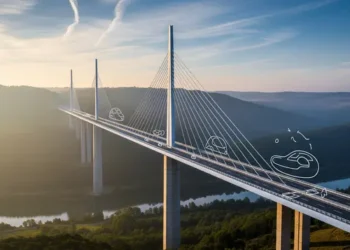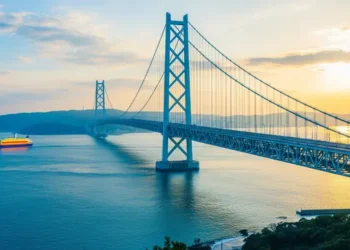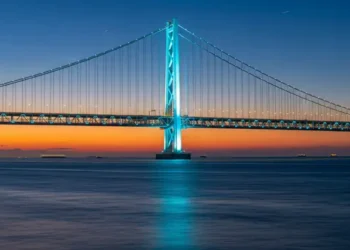


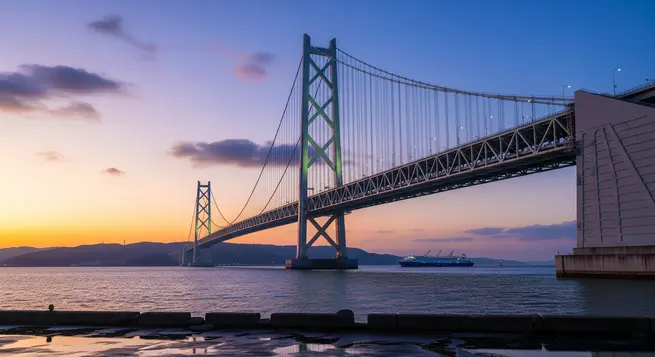

The Akashi Kaikyō Bridge is one of the world’s longest suspension spans. Connecting Honshu with Awaji Island, this massive bridge was built to withstand extreme environmental forces, including powerful typhoons and earthquakes.
This quiz looks at the design choices and historic events that shaped its construction. You will see questions about its record-setting span, the impact of the 1995 earthquake, and the unique tech behind its massive cables.
When you finish, try our other trivia. We have games covering bridges and engineering, fun facts about islands and beaches, and trivia on towers.
The Akashi Kaikyō Bridge connects the island of Honshu with which island?
Awaji Island
Awaji Island
Hokkaido
Hokkaido
Shikoku
Shikoku
Kyushu
Kyushu
What type of bridge is the Akashi Kaikyō Bridge?
Arch bridge
Arch bridge
Cable-stayed bridge
Cable-stayed bridge
Truss bridge
Truss bridge
Suspension bridge
Suspension bridge
Which major seismic event occurred during the construction of the Akashi Kaikyō Bridge in 1995?
Tokyo earthquake
Tokyo earthquake
Kyoto earthquake
Kyoto earthquake
Osaka earthquake
Osaka earthquake
Kobe earthquake
Kobe earthquake
What is the length of the central span of the Akashi Kaikyō Bridge?
1,791 meters
1,791 meters
1,891 meters
1,891 meters
2,091 meters
2,091 meters
1,991 meters
1,991 meters
What material was primarily used for the main suspension cables of the bridge?
Titanium alloy cables
Titanium alloy cables
Nylon fiber cables
Nylon fiber cables
Steel wire cables
Steel wire cables
Carbon fiber cables
Carbon fiber cables
In which year was the Akashi Kaikyō Bridge officially opened to traffic?
1995
1995
1992
1992
2000
2000
1998
1998
Which island does the Akashi Kaikyō Bridge connect to the Japanese main island of Honshu?
Awaji Island
Awaji Island
Shodoshima
Shodoshima
Tsushima Island
Tsushima Island
Sado Island
Sado Island
What engineering feature was incorporated to help the bridge withstand high winds and seismic activity?
Counterweights
Counterweights
Dampers
Dampers
Hydraulic jacks
Hydraulic jacks
Tension springs
Tension springs
What is the total length of the Akashi Kaikyō Bridge?
Approximately 4,111 meters
Approximately 4,111 meters
Approximately 3,911 meters
Approximately 3,911 meters
Approximately 4,311 meters
Approximately 4,311 meters
Approximately 3,611 meters
Approximately 3,611 meters
How did the 1995 Great Hanshin Earthquake affect the construction of the bridge?
The earthquake destroyed one of the main anchorage foundations
The earthquake destroyed one of the main anchorage foundations
The earthquake damaged the suspension cables beyond repair
The earthquake damaged the suspension cables beyond repair
The earthquake caused the towers to sink into the seabed
The earthquake caused the towers to sink into the seabed
The earthquake shifted the towers further apart
The earthquake shifted the towers further apart
How did engineers accommodate the 1-meter increase in the bridge’s span caused by the 1995 earthquake?
By adjusting the length of the truss members and cable bands
By adjusting the length of the truss members and cable bands
By demolishing the towers and starting construction from scratch
By demolishing the towers and starting construction from scratch
By stretching the existing steel cables to fit the new span
By stretching the existing steel cables to fit the new span
By using hydraulic presses to push the towers back into position
By using hydraulic presses to push the towers back into position
What was the approximate magnitude of the 1995 earthquake that struck near the bridge site?
7.0 magnitude
7.0 magnitude
7.6 magnitude
7.6 magnitude
7.3 magnitude
7.3 magnitude
6.7 magnitude
6.7 magnitude
What is the height of the two main suspension towers above the water?
302 meters
302 meters
322 meters
322 meters
282 meters
282 meters
262 meters
262 meters
What is the primary function of the heavy concrete structures known as anchorages on either end of the bridge?
To support the bridge’s main deck during high-speed rail transit
To support the bridge’s main deck during high-speed rail transit
To stabilize the bridge against tidal currents in the Akashi Strait
To stabilize the bridge against tidal currents in the Akashi Strait
To anchor the massive tension of the main cables into the ground
To anchor the massive tension of the main cables into the ground
It was deemed unnecessary due to local geology
It was deemed unnecessary due to local geology
Approximately how much high-tensile steel wire was used to create the suspension cables for the bridge?
200,000 km
200,000 km
300,000 km
300,000 km
250,000 km
250,000 km
350,000 km
350,000 km
Beyond earthquakes, what environmental factor posed a major challenge for the bridge construction team during the laying of foundations?
Tidal currents reaching up to 4.5 meters per second
Tidal currents reaching up to 4.5 meters per second
Soft, volcanic soil at the base of the pillars
Soft, volcanic soil at the base of the pillars
Frequent typhoon strikes in the bay area
Frequent typhoon strikes in the bay area
High levels of salt corrosion in the strait
High levels of salt corrosion in the strait
What is the depth of the main tower foundation caissons below sea level?
70 meters
70 meters
80 meters
80 meters
60 meters
60 meters
50 meters
50 meters
What world record did the Akashi Kaikyō Bridge hold for over a decade?
It was the first bridge built to withstand a magnitude 8.0 earthquake
It was the first bridge built to withstand a magnitude 8.0 earthquake
It became the longest suspension bridge in the world upon completion
It became the longest suspension bridge in the world upon completion
It was the first bridge to utilize bridge-deck illumination at night
It was the first bridge to utilize bridge-deck illumination at night
It became the first bridge to be built utilizing exclusively seismic-damping technology
It became the first bridge to be built utilizing exclusively seismic-damping technology
Which bridge previously held the record for the longest central span before the Akashi Kaikyō Bridge was built?
Humber Bridge
Humber Bridge
Brooklyn Bridge
Brooklyn Bridge
Golden Gate Bridge
Golden Gate Bridge
Verrazzano-Narrows Bridge
Verrazzano-Narrows Bridge
Why does the deck of the bridge utilize a robust truss design?
The internal space allows for pedestrian traffic along the full span
The internal space allows for pedestrian traffic along the full span
It holds internal pipes for power and communication cables
It holds internal pipes for power and communication cables
The truss structure provides strength and aerodynamic stability
The truss structure provides strength and aerodynamic stability
It is designed to be easily retractable for emergency repairs
It is designed to be easily retractable for emergency repairs
What specific technological advancement allowed the main cables to handle the extreme tension required for a 1,991-meter span?
The bridge’s proprietary seismic joint system
The bridge’s proprietary seismic joint system
High-strength steel wire with a tensile strength of 180 kgf/mm²
High-strength steel wire with a tensile strength of 180 kgf/mm²
The cable-anchoring technology specifically developed for the project
The cable-anchoring technology specifically developed for the project
The mass-damper system located at the top of the towers
The mass-damper system located at the top of the towers
Which of the following is true regarding the engineering legacy of the Akashi Kaikyō Bridge?
The bridge was built in a location completely safe from seismic activity.
The bridge was built in a location completely safe from seismic activity.
The project ended in financial ruin due to the earthquake damage.
The project ended in financial ruin due to the earthquake damage.
The bridge was immediately closed after opening due to structural instability.
The bridge was immediately closed after opening due to structural instability.
The bridge survived the 1995 Kobe earthquake during construction with only a 1-meter span increase and no structural damage, proving its robust seismic design.
The bridge survived the 1995 Kobe earthquake during construction with only a 1-meter span increase and no structural damage, proving its robust seismic design.
You can do better
Not bad
Great!
Want more? We offer trivia on famous landmarks, general architecture, and other unique places to keep you learning about the world’s built environment.